

Whether you're coastal cruising, racing offshore or heading out for a quick day sail, the right marine safety equipment is essential. Our Safety department brings together life-saving gear, emergency signalling, fire protection and man overboard recovery equipment — carefully selected to meet UK regulations and real-world boating demands.




Popular products in Safety

Catalogue Code: 420278
£17.95
Available In-store to call & collect
Available to buy online

Catalogue Code: 590011
£19.95
Available In-store to call & collect
Available to buy online

Catalogue Code: 590001
£69.95
Save
£5.00 RRP
£74.95
Available In-store to call & collect
Available to buy online

Catalogue Code: M080001
£34.95
Save
£5.05 RRP
£40.00
Available In-store to call & collect
Available to buy online

Catalogue Code: 500076
£499.95
Save
£98.07 RRP
£598.02
Available In-store to call & collect
Available to buy online


Catalogue Code: 590085
£11.95
Available In-store to call & collect
Available to buy online

Catalogue Code: 550109
£819.00
Available In-store to call & collect
Available to buy online
Catalogue Code: 590133
£99.95
Save
£25.30 RRP
£125.25
Available In-store to call & collect
Available to buy online

Catalogue Code: 540083
£71.95
Save
£4.85 RRP
£76.80
Available In-store to call & collect
Available to buy online

Catalogue Code: 540060
£15.95
Available In-store to call & collect
Available to buy online

Catalogue Code: 530001
£35.95
Save
£12.06 RRP
£48.01
Available In-store to call & collect
Available to buy online

Catalogue Code: 550311
£19.95
Save
£4.00 RRP
£23.95
Available In-store to call & collect
Available to buy online
Catalogue Code: 520019
£14.95
Available In-store to call & collect
Available to buy online

Catalogue Code: 890913
£19.95
Available In-store to call & collect
Available to buy online

Catalogue Code: 590094
£2.95
Available In-store to call & collect
Available to buy online

Catalogue Code: 560002
£12.95
Available In-store to call & collect
Available to buy online

Catalogue Code: B890011
£17.95
Save
£7.27 RRP
£25.22
Available In-store to call & collect
Available to buy online

Catalogue Code: 590072
£33.95
Save
£4.80 RRP
£38.75
Available In-store to call & collect
Available to buy online

Catalogue Code: 550363
£59.95
Available In-store to call & collect
Available to buy online

Catalogue Code: 540052
£21.95
Save
£7.00 RRP
£28.95
Available In-store to call & collect
Available to buy online

Catalogue Code: 540055
£11.95
Save
£2.04 RRP
£13.99
Available In-store to call & collect
Available to buy online
Safety Equipment FAQ
Safety Equipment for Boats – What You’ll Find at Force 4
Being prepared is the golden rule of boating. Our Safety department covers every eventuality at sea, ensuring you meet regulations and best practices. Whether you’re coastal cruising or heading offshore, ensuring your crew is fitted with the right Life Jackets & Buoyancy Aids is step one. We cater to the whole family, including Children's Life Jackets and even Dog Life Jackets.
Beyond personal flotation, a well-equipped vessel needs reliable Man Overboard (MOB) Equipment like rescue slings, danbuoys, and throwlines. Signalling & Visibility gear such as flares help you be seen in emergency situations.
Our range of EPIRBs, PLBs & Personal AIS Units ensures you can always call for help, while our extensive selection of Life Rafts and Fire & Gas Safety equipment provides that ultimate line of defence.
What is the difference between a life jacket and a buoyancy aid?
A Buoyancy Aid is designed to help you stay afloat while treading water. This makes them an ideal choice for dinghy sailing, kayaking, and sheltered water sports where you expect to get wet.
Life Jackets, however, provide much more buoyancy (usually 150N to 275N) and are specifically designed to turn an unconscious person face-up in the water, keeping their airway clear. For yachting, motorboating, and offshore sailing, an Automatic Life Jacket or manual life jacket is the essential choice.
Force 4 Video: Life Jacket Breakdown - What Life Jacket Is Best For You?
Force 4 Video: How Sensitive are Automatic Lifejackets?
What’s the difference between an EPIRB, PLB and AIS unit — and which do I need?
EPIRBs, PLBs and Personal AIS devices all help rescuers locate you in an emergency, but they serve different roles depending on your boat, crew and cruising plans.
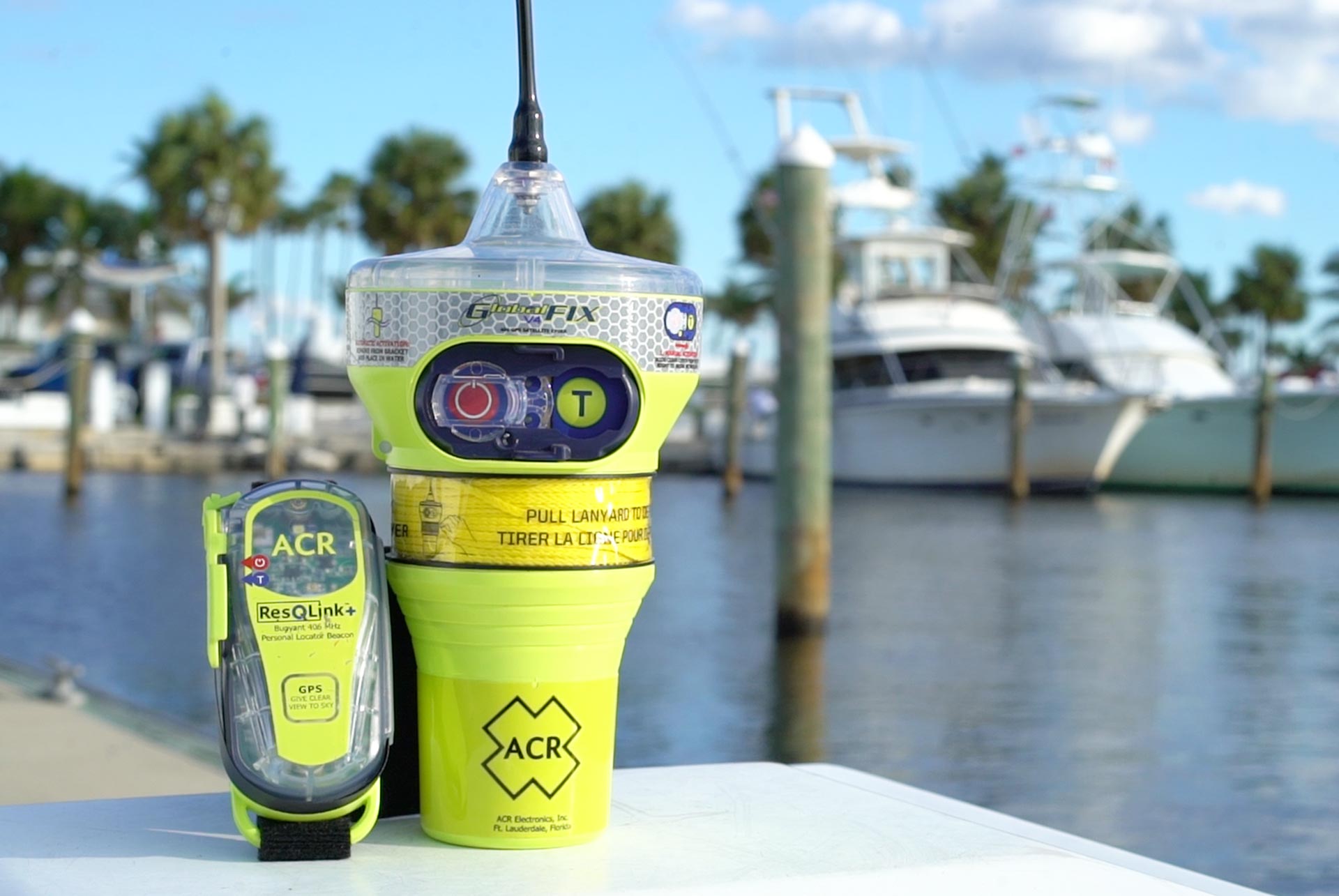
EPIRBs (Emergency Position Indicating Radio Beacons) are registered to your vessel and designed for serious offshore emergencies. When activated, the unit sends a distress signal via satellite to global rescue services. Most modern models now include GPS, which allows for pinpointing your location with high accuracy. EPIRBs are the go-to option for offshore cruising and passagemaking.
A PLB (Personal Locator Beacon) works in a similar way but is registered to an individual rather than a boat. They are smaller, portable and ideal for crew working on deck, solo sailors, or anyone wanting a personal backup to the vessel’s main EPIRB. A PLB ensures you can still alert rescue services even if you become separated from the boat.
Shop for personal locator beacons
Personal AIS units are designed specifically for man overboard situations. They don’t alert global rescue services; instead, they transmit your position to nearby AIS-equipped vessels. This means your own vessel can be immediately alerted to a MOB situation for a crew member carrying an AIS beacon. This makes it incredibly effective for fast, local recovery by your own crew or nearby boats.
See all AIS beacon options here
Which should you choose?
- For coastal sailing and inshore cruising, a PLB or Personal AIS unit provides strong personal protection.
- For offshore and extended passages, an EPIRB is strongly recommended as your primary emergency beacon.
- For maximum safety, many sailors carry a combination — an EPIRB for the vessel, plus PLBs or AIS units for individual crew members.
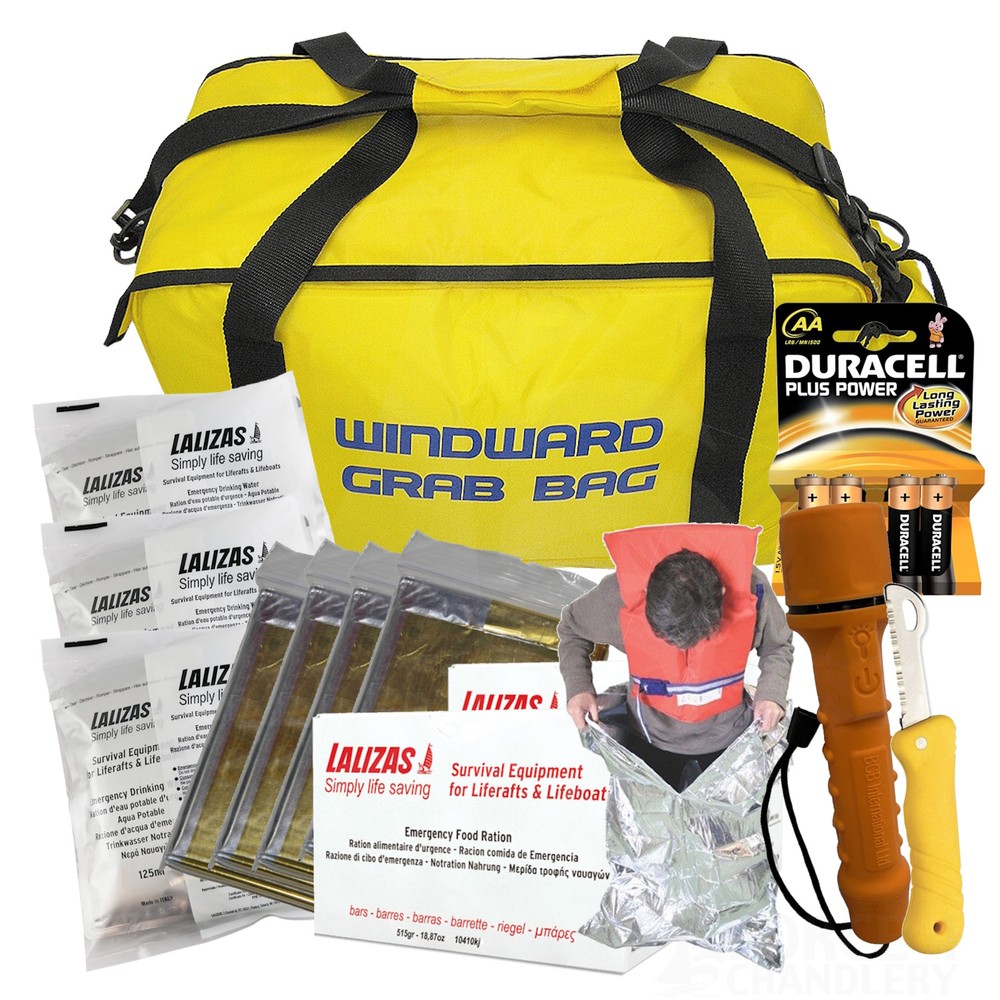
What should I keep in a grab bag?
A well‑stocked grab bag should cover communication, signalling and survival essentials. This ensures you have everything you need to hand if you have to abandon ship at short notice.
Most sailors start with reliable distress flares, and many now add LED flares as a long‑lasting, reusable backup. LED options are brilliant for a grab bag thanks to their durability and battery life. They’re not a full replacement for traditional pyrotechnics, which remain the primary distress signal at sea.
A PLB is another key item, giving you a personal satellite distress alert that works independently of the boat. It’s invaluable if you become separated from the vessel, as the signal is tied to you, not your onboard systems. If your boat doesn’t carry an EPIRB, having a Personal Locator Beacon in your grab bag is a smart way to ensure you still have a reliable long‑range distress option.
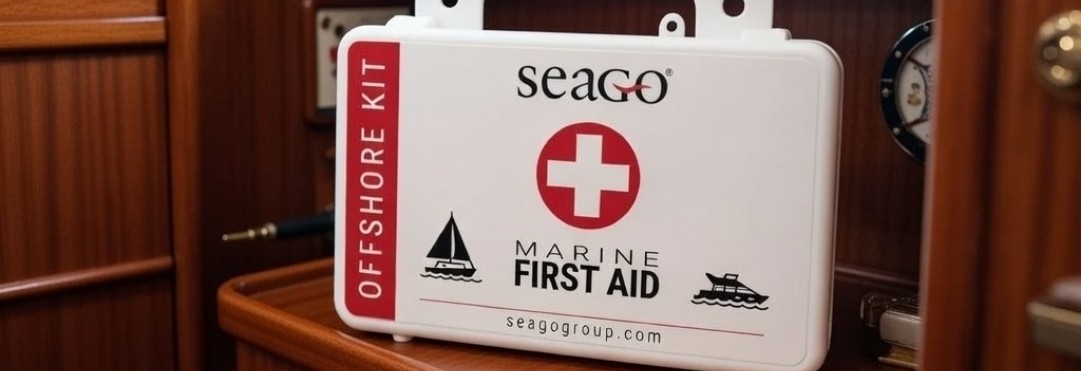
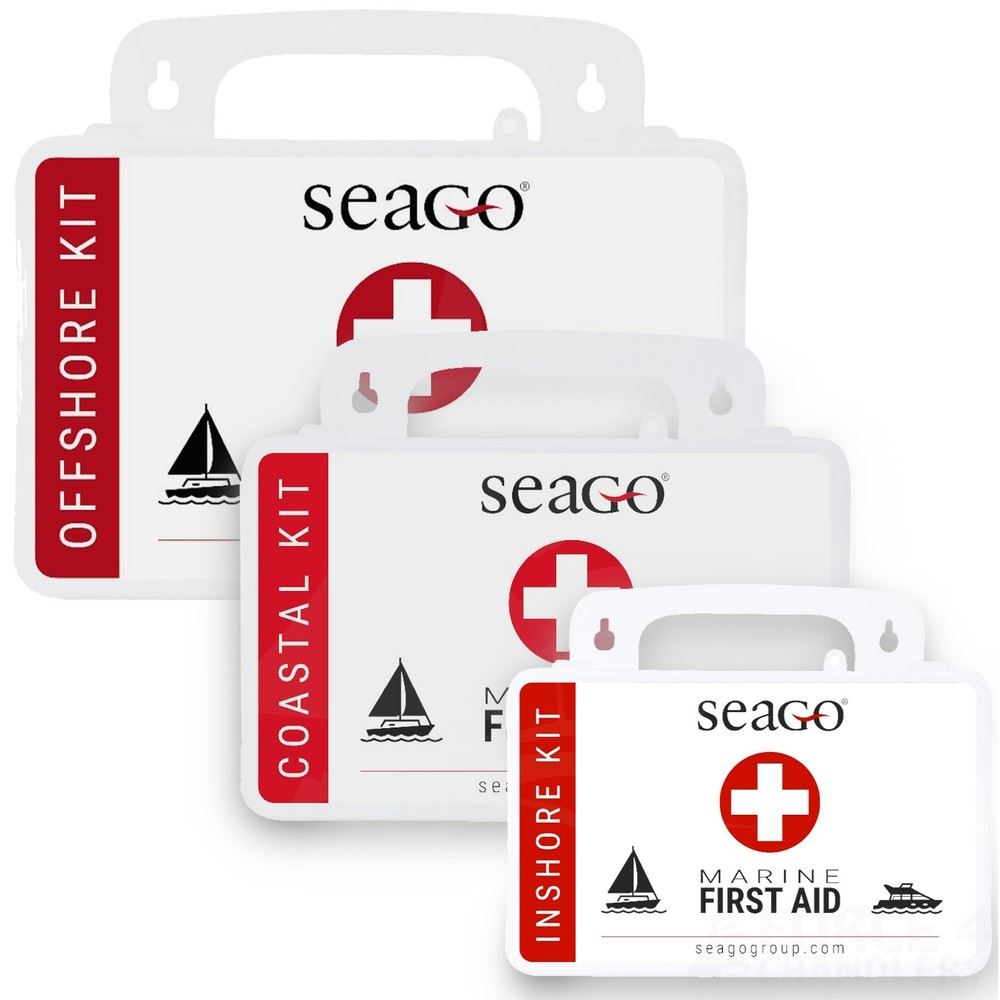
Having a torch or head torch is very useful for night‑time visibility. First aid kits & TPAs are essential to help manage injuries and exposure until help arrives.
For communication, a waterproof handheld VHF radio is one of the most useful tools you can add to a grab bag. It allows you to contact nearby vessels or rescue services if you lose your main radio. Some VHF radios can run off household AA batteries with an adapter tray; it is a good idea to include the adapter and spare batteries in your kit.
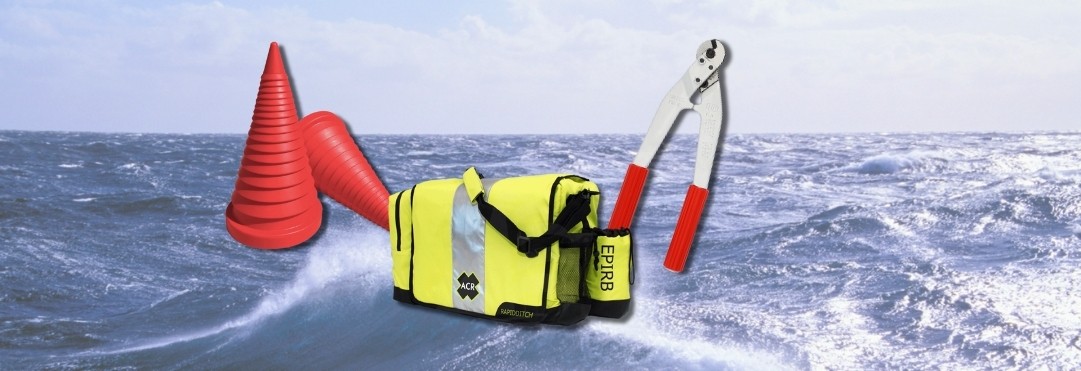
Finally, a good safety knife is very handy to have, allowing you to cut lines, webbing, or tangled gear in an emergency.
What man overboard equipment should I carry?
A Man Overboard situation is every sailor's worst nightmare, but equipping your boat correctly drastically improves the chances of a safe, swift rescue.
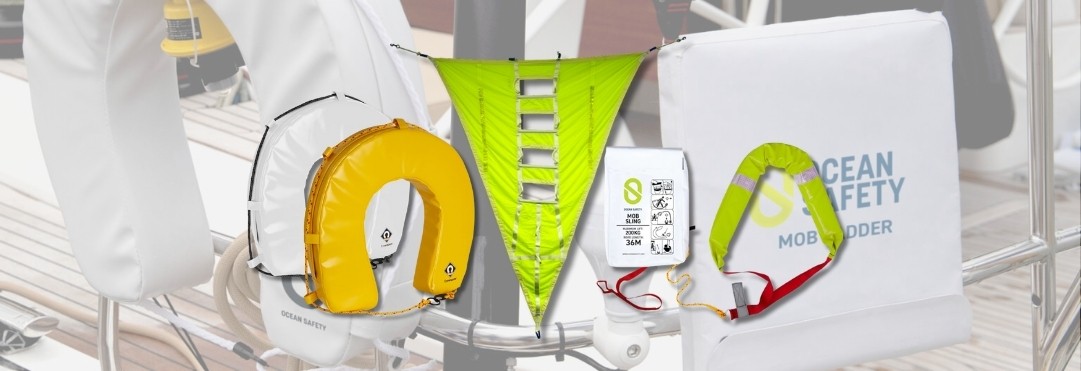
At minimum, most skippers carry a horseshoe lifebuoy, a throwline, and a recovery sling. These form the core of any man overboard kit, giving you flotation, reach, and a reliable way to bring someone back alongside. They’re simple, effective, and essential for coastal sailing.
If you are a regular coastal and offshore sailor, then the next thing to consider including in your setup is a danbuoy. These highly visible markers float upright and give you a way of maintaining visual contact with the MOB — especially in waves or poor conditions. Emergency ladders are another very useful addition to your man overboard setup. They allow a conscious casualty a way of getting themselves back on board with minimal assistance; this is particularly useful on boats with small or limited crews.
Getting someone back on board can be the hardest part of a man overboard recovery. Dealing with a casualty who is wet and potentially exhausted is incredibly hard work. Rescue slings and block-and-tackle recovery systems provide the mechanical advantage needed to hoist someone up.
Of course, prevention is just as important as recovery. Fitting jackstays and using life jacket safety lines, or tethers, keeps crew securely clipped to the vessel. This helps in reducing the chance of going overboard in the first place — particularly on night passages or when working on deck in heavy weather.
The right setup for you depends on your boat, crew and the waters you find yourself in. There are many varieties of all these products to allow for individual setups depending on these needs.