

We have handpicked our selection of chandlery and equipment to cater to the needs of any boat, sail or power. Chandlery above deck refers to anything found on or above the topsides of your vessel.
Shop By Type






Popular Products in Chandlery Above Deck

Catalogue Code: 841290
£11.95
Available In-store to call & collect
Available to buy online

Catalogue Code: 490117
£21.95
Save
£1.72 RRP
£23.67
Available In-store to call & collect
Available to buy online

Catalogue Code: 860999
£94.95
Available In-store to call & collect
Available to buy online

Catalogue Code: M870357
£7.95
Save
£2.80 RRP
£10.75
Available In-store to call & collect
Available to buy online

Catalogue Code: 850156
£11.95
Save
£2.00 RRP
£13.95
Available In-store to call & collect
Available to buy online

Catalogue Code: M890043
£49.95
Available In-store to call & collect
Available to buy online

Catalogue Code: 590001
£66.95
Save
£8.00 RRP
£74.95
Available In-store to call & collect
Available to buy online

Catalogue Code: M840213
£1.10
Available In-store to call & collect
Available to buy online

Catalogue Code: 840428
£23.95
Available In-store to call & collect
Available to buy online

Catalogue Code: 880016
£15.45
Save
£0.29 RRP
£15.74
Available In-store to call & collect
Available to buy online

Catalogue Code: M880451
£4.75
Save
£0.36 RRP
£5.11
Available In-store to call & collect
Available to buy online
Chandlery Above Deck FAQ
What products are included in Chandlery Above Deck?
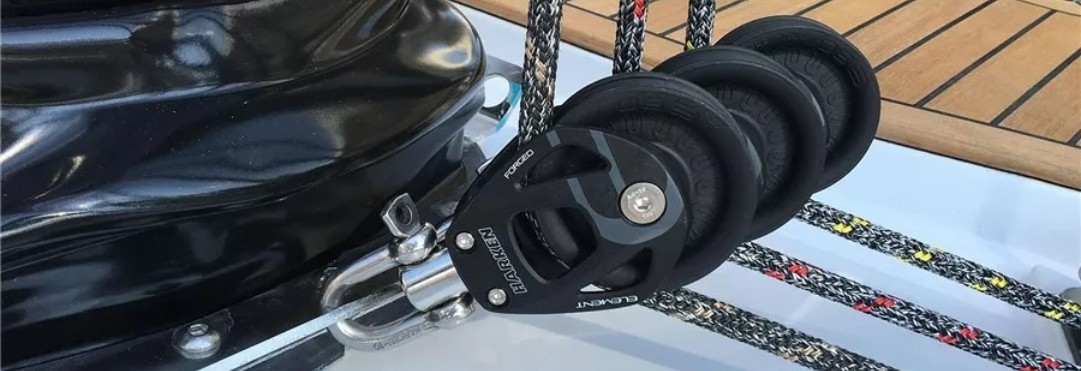
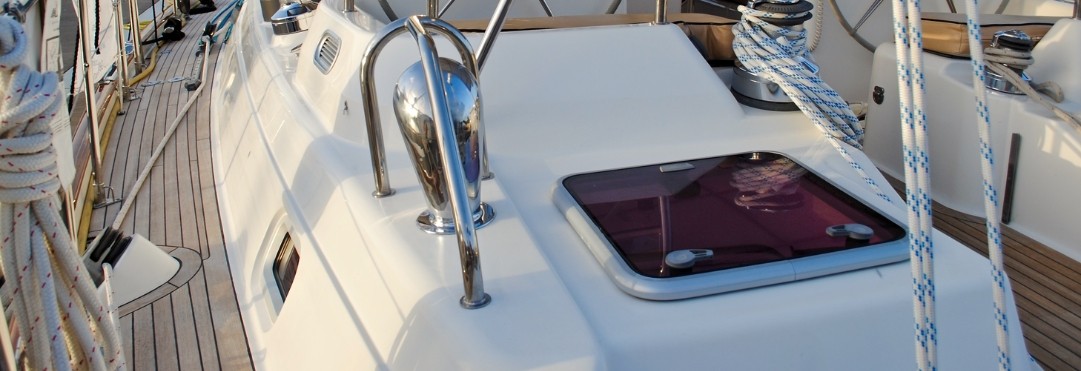
Chandlery Above Deck includes equipment and fittings you find above deck or used on the exterior of your boat. This includes Deck Hardware for boats such as Deck Organisers, Cleats and Deck Winches. Anchoring and Mooring equipment like Fenders for sailboats and power, Anchors and Mooring Lines.
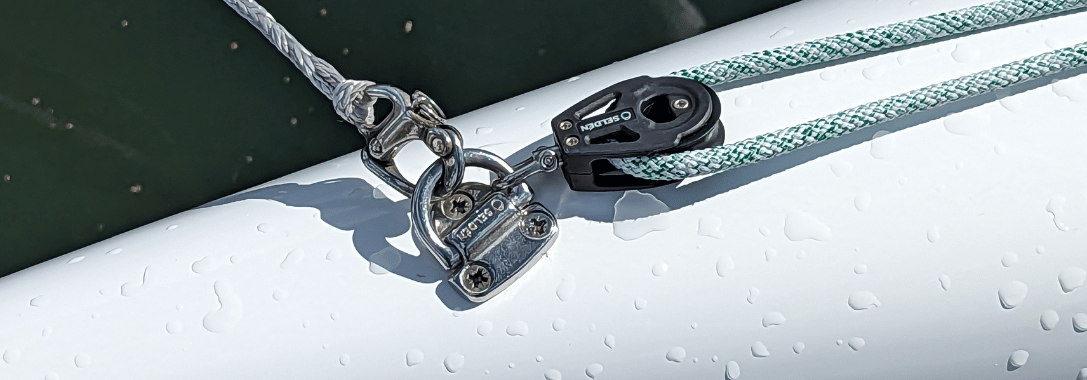
You will also find a complete selection of Shackles & Stainless Steel Fittings including Pad Eyes, U-Bolts & Eyebolts, Carbine Hooks and Deck Eyes. There is also a massive selection of Rope and Rigging for use all over your boat, from Cruising Sheets to High Performance Dyneemas.
And of course, if you're a sailor or looking for Blocks & Pulleys, you will find them in Chandlery Above Deck along with much more.
How do I choose the right fenders for my boat?
Choosing the right fenders for your boat depends on a few things. Firstly it comes down to boat itself, its size - Length, Beam and Displacement. As a rule larger boats will need longer and wider fenders for better protection. Flat fenders are a great option for when it comes to tight moorings or use on piles. If you're unsure about what fenders you need, try to match your existing set up or consider going one size up for exposed moorings.
Click here to see all Fenders and Accessories
What size anchor do I need for my boat?
Choosing the right anchor for your boat can be tricky; there isn't a one-size-suits-all solution. You need to base your choice on the length and weight of your boat, as well as how and where you will use it.
Most manufacturers have a size guide for their anchors, which can be found on our corresponding anchor product pages, helping you make the right choice for you and your boat. There are a few general rules that can be useful, though, in getting you to a good starting point.
For dayboats, tenders, and small inflatables, a lightweight fluke (Danforth-style) or folding grapnel anchor is usually sufficient. They're easy to handle, stow compactly, and provide good holding in sand or mud for short stops.
For cruising yachts and motorboats, most owners opt for a plough (like CQR or Delta), Claw (Bruce-style), or modern scoop-style anchor (e.g., Rocna, Mantus, Spade) as their primary anchor. These offer reliable, versatile performance across varied seabeds like sand, mud, or weed.
A good rule: always err on the side of slightly bigger and heavier. An oversized anchor might be a bit trickier to stow, but it delivers far greater security when the wind picks up or conditions worsen — peace of mind is worth the extra weight!
Finally, seabed matters. Knowing where you're going to be using your anchor can make a big difference. Anchors don't perform the same on every seabed, and even a heavy anchor might not hold when you need it if it's the wrong type.
- Sand and mud — Most anchors hold well; ploughs (e.g., Delta/CQR), fluke/Danforth, and modern scoop anchors (e.g., Rocna, Spade) excel here.
- Weed/grass — Thick weed prevents penetration; modern scoop anchors with sharp, aggressive flukes (Rocna, Spade, Mantus) usually perform best.
- Rock — Digging in is tough; try a grapnel or heavier plough, but rocky seabeds are always challenging — consider alternatives like mooring buoys when possible.
- Gravel/shingle — Holding can be inconsistent; heavier ploughs or modern scoop anchors generally offer the most reliable grip.
How do I choose a deck winch for my boat?
Deck winches (especially for sheets, halyards, or high-load lines) should match your boat's size, sail area, rig type, and sailing style. For example, racing yachts need faster, lower-friction options, while cruising prioritises ease and durability.
Key points:
- Size/power — Match to line loads (use brand charts: Lewmar, Harken, Andersen). Rule of thumb: go one size up for easier handling and longevity.
- Speeds — 1- or 2-speed for versatility (quick trim in 1st, power in higher gears).
- Type — Self-tailing for single-handed sailing; plain-top for traditional. Aluminium or chrome bronze for lightweight corrosion resistance.
- Rope fit — Drum/jaws must suit your line diameters (e.g., 8–14mm typical).
How do I install an anchor windlass on my boat?
Installing a windlass improves anchoring safety and ease — ideal for larger boats or short-handed crews. It's a DIY-friendly job with basic mechanical/electrical know-how.
Key Things to Consider:
- Choose the right type: Horizontal Windlass (easier install, motor above deck) or Vertical Windlass (cleaner deck, better for tight lockers). Match power to boat size (e.g., 300–700W for smaller yachts, 1000W+ for larger) and ensure chain/gypsy compatibility.
- Plan location & prep: Position over a deep anchor locker for straight chain drop (nearly vertical for vertical models, up to 10° off for horizontal). Reinforce deck with backing plate if needed; ensure flat surface and self-launching anchor (e.g., Rocna, Spade, Delta).
- Mount & wire: Secure windlass firmly, run correctly sized power cables (thicker for longer runs to avoid voltage drop; consider dedicated bow battery for high-power units), and add controls (foot switches at bow, helm toggle, or remote).
- Final setup & test: Fit chain/anchor, check alignment, and test smooth operation.
Tips: Prioritise straight chain path to avoid jams, use correct cable sizing to prevent voltage drop, and get professional help for electrics or structural concerns.
For full step-by-step instructions, diagrams, sizing charts and wiring details, read our complete: How to Install a Windlass guide.
What size Red Ensign do I need for my boat?
A Red Ensign should be flown by British-registered vessels in daylight when under way, at anchor, or in harbour. Size matters for proportion and visibility — too small can look undersized on modern yachts; too large can be unwieldy.
Rule of thumb: 1 inch (2.5 cm) of fly length per foot of boat length (e.g., 30ft boat → 30-inch fly / ~2.5ft long). Some owners will go slightly larger as sizing by this rule can leave an ensign looking a little small, especially on modern yachts.
Common sizes:
- Up to 26ft: ¾ yard (27" × 18")
- 27–34ft: 1 yard (36" × 24")
- 35–42ft: 1¼ yard (45" × 30")
- 43–50ft: 1½ yard (54" × 36")
- 51ft+: 1¾ yard or bigger