Sextants

Refine your results by:

Sort By:
Save: £26.05
Only £199.95
SRP: £226.00
( 247.94)
Buy
Davis MK 15 Master Sextant - A quality plastic sextant for professional use, made from high impact, weather resistant plastic with salt-spray resistant mirrors.Features:• Large, easily adjusted mirror... »more info
Save: £50.50
Only £499.50
SRP: £550.00
( 619.38)
Buy
ASTRA 3B DELUXE METAL SEXTANT A top class metal sextant with crystal clear 3.5x40 telescope and split view mirror collecting ample light for star sights, making sights easier, 3 horizon and 4 index sh... »more info
Save: £12.05
Only £49.95
SRP: £62.00
( 61.94)
Buy
Davis Mark III Sextant - Precision manufactured to within 2 minutes of accuracy, this plastic sextant is perfect for the student or amateur navigator. Easy to use,full 7 arc and 4 sun shades, it comes... »more info
Save: £79.05
Only £869.95
SRP: £949.00
( 1078.74)
Buy
Freiberger Drum Sextant - Split View with Wooden Handle- Top of the range sextant for the serious navigator and the long term cruiser. Superb optics and quality engineering. Complete with wooden box a... »more info
Save: £43.04
Only £239.95
SRP: £282.99
( 297.54)
Buy
Davis Mk 25 Sextant - Deluxe Mark 25 Master Sextant with full-field dielectric Beam ConvergerThis top of the line plastic sextant features a full-field Beam Converger™ mirror, sometimes referred... »more info

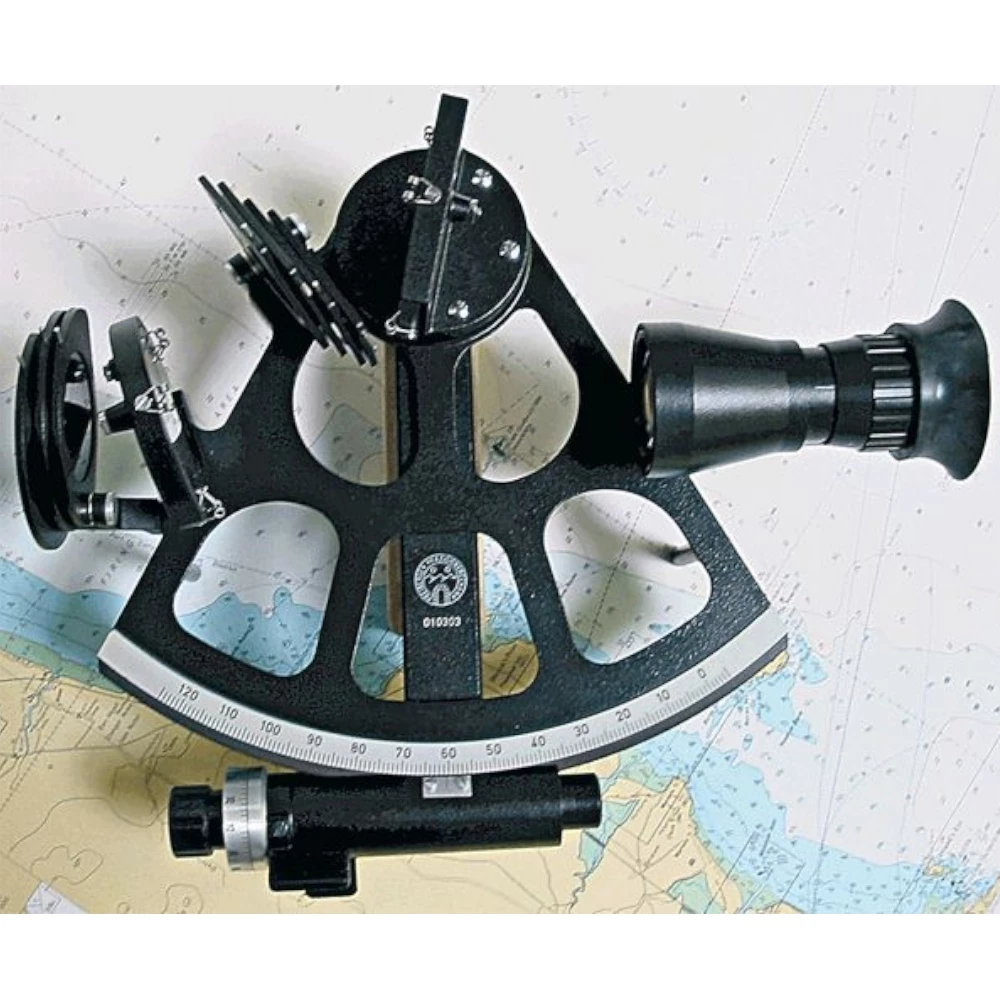
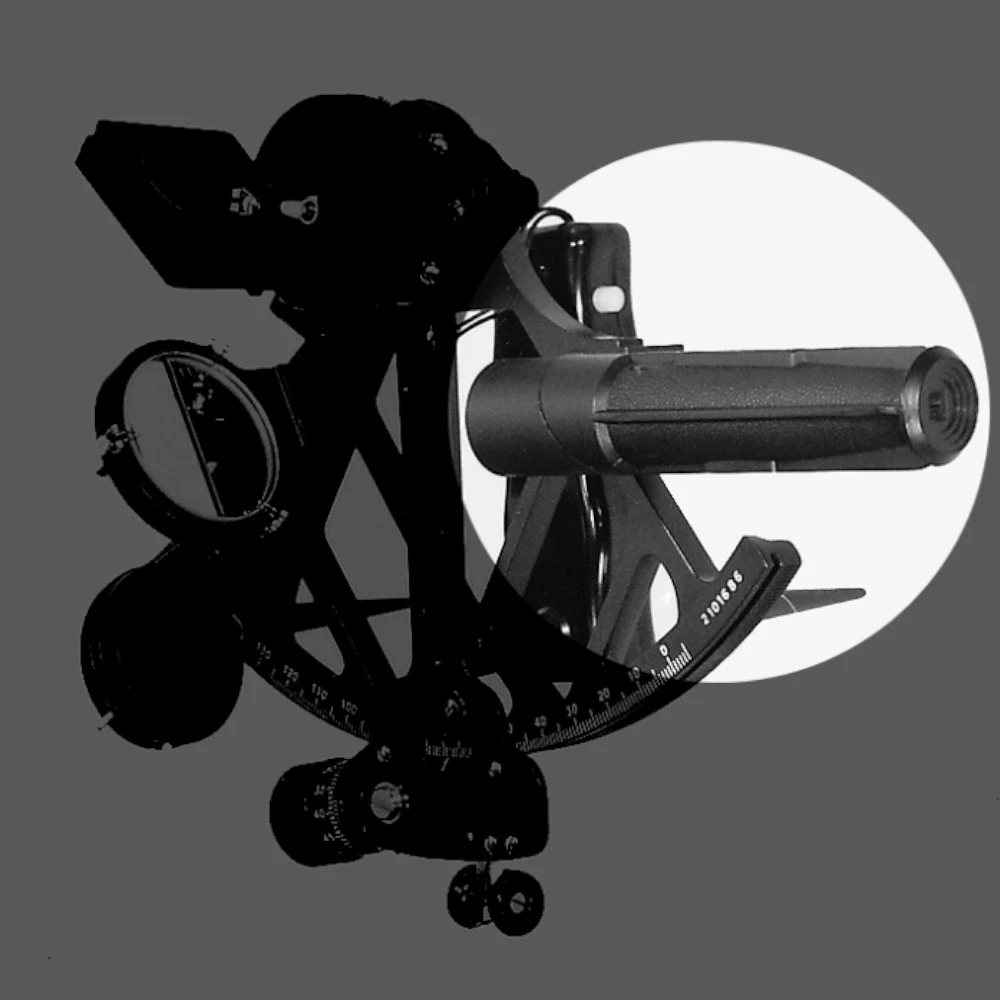
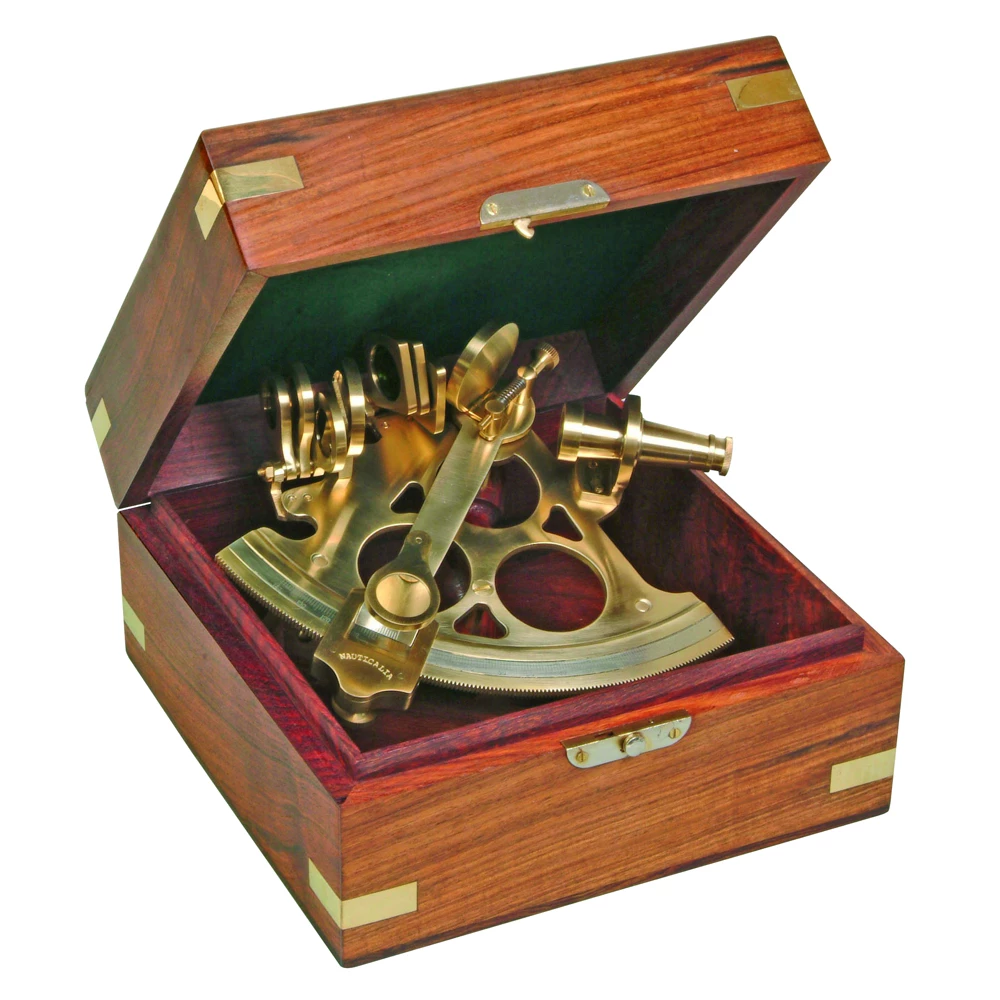
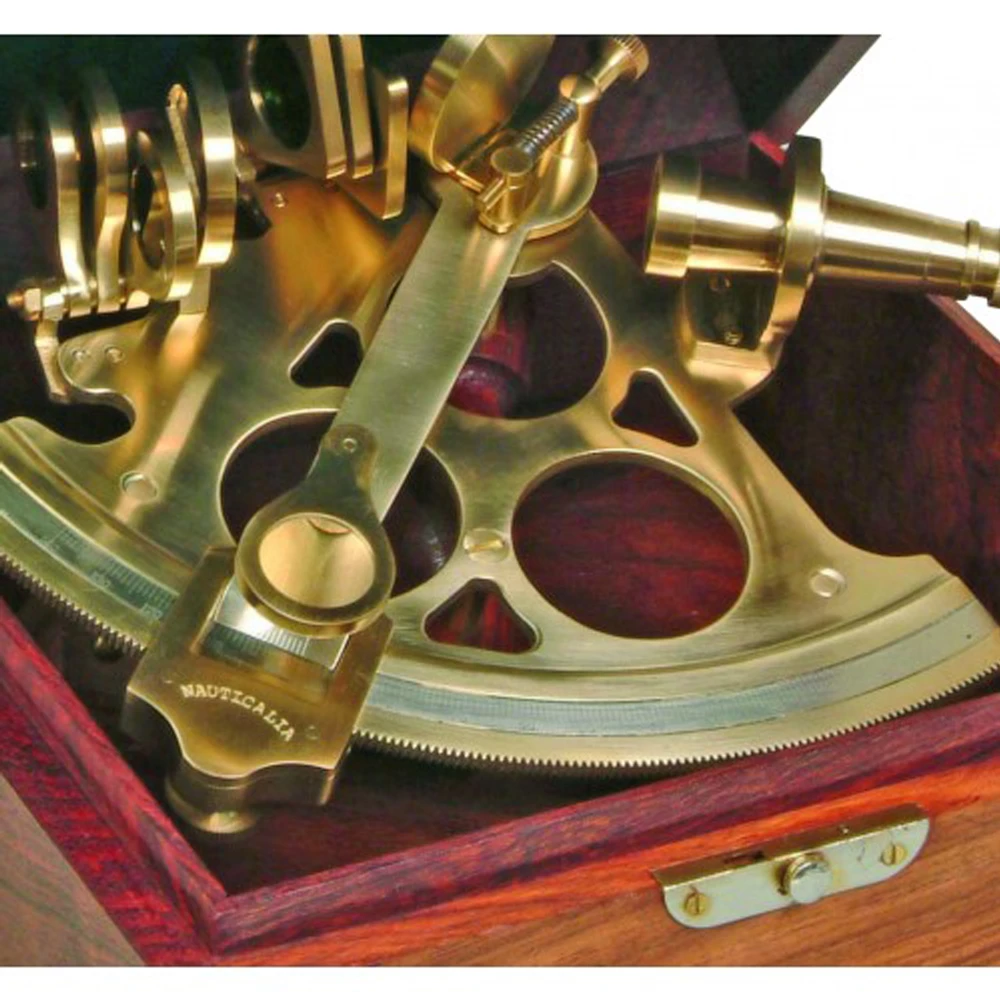
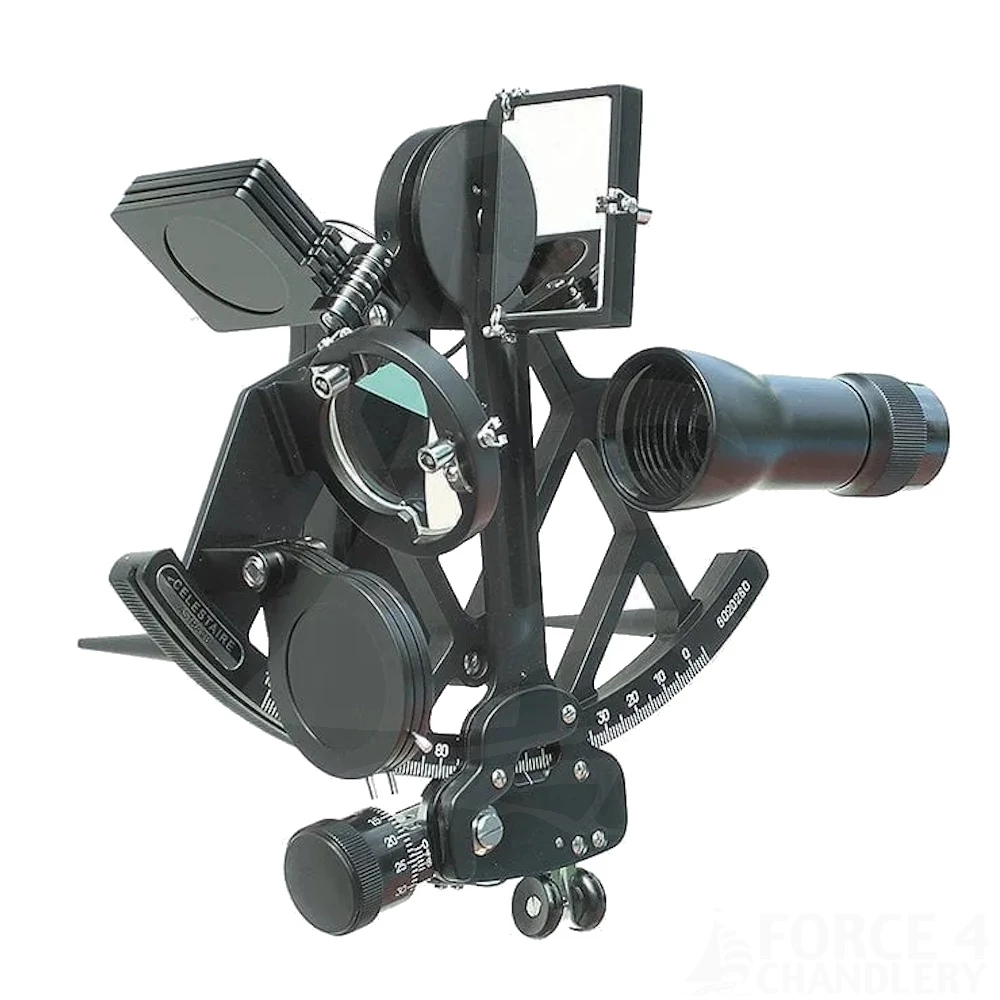
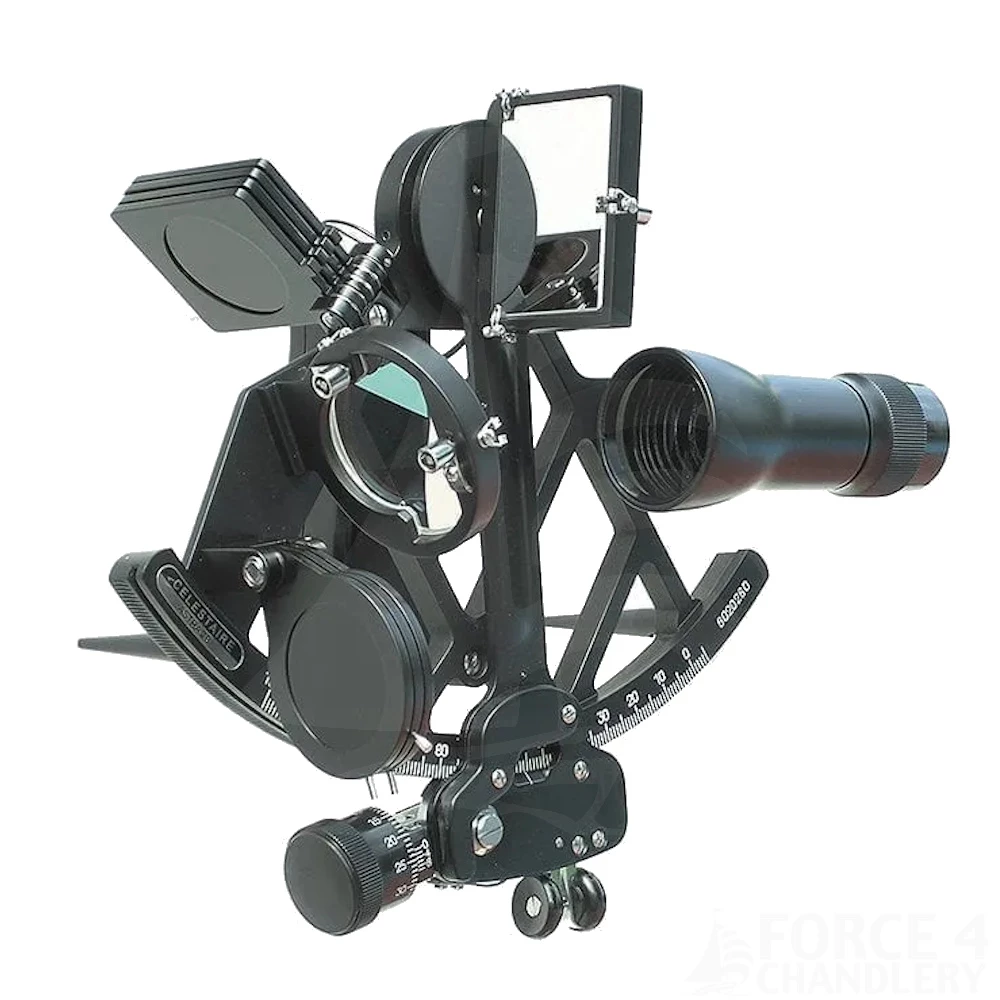
The sextant is the instrument that the GPS has replaced, much to the relief of the uninitiated who regard it with a mixture of respect and incromprehension. Although indeed somewhat complex and intimidating to use, It's function is quite simple, it measures an angle.
The ancestor of the sextant was the kamal, a rudimentary instrument used by Arab Navigators from the time of Sinbad the Sailor. Used to find a predetermined latitude or to maintain a course on one for latitude sailing, it consisted of a small wooden plate with a knotted string attached. The string was held between the teeth and stretched taut, while the bottom of the plate was aligned with the horizon and it's top with the North Star. The length of the string determined the proper angle for the desired latitude, and this length was itself determined by choosing the proper preset know to hold between the teeth.
The Cross Staff (also called Jacob's Staff) is a variation of the kamal which allows angles to be measured with better accuracy. It was this instrument that the European navigators used during the Age of Discovery.
The Problem with these ancient systems for measuring angles is that one has to sight in two directions at once: towards the horizon and towards the celestrial body. This is especially difficult from the deck of a moving boat because, as one's gaze moves from one direction to the other, the initial alignment is easily lost. In theory, the astrolabe solves this problem by acting as a pendulum to supply the vertical (instead of using the horizon): only one direction has to be sighted. On land, this became the instrument of choice, but it's use is very imprecise at sea because of the boats movement.
It was John Hadley who found the solution in 1730, thanks to an ingenious optical system combining the two directions to be sighted. The horizon is sighted through a semi-transparent mirror onto which the celestrial body is projected by means of a second mirror.
The second mirror is movable and adjusted to align the celestrial body with the horizon. When this is done, the height (altitude) of the celestrial body (angle C in the figure) is given by twice the angle between the two mirrors (angle D).